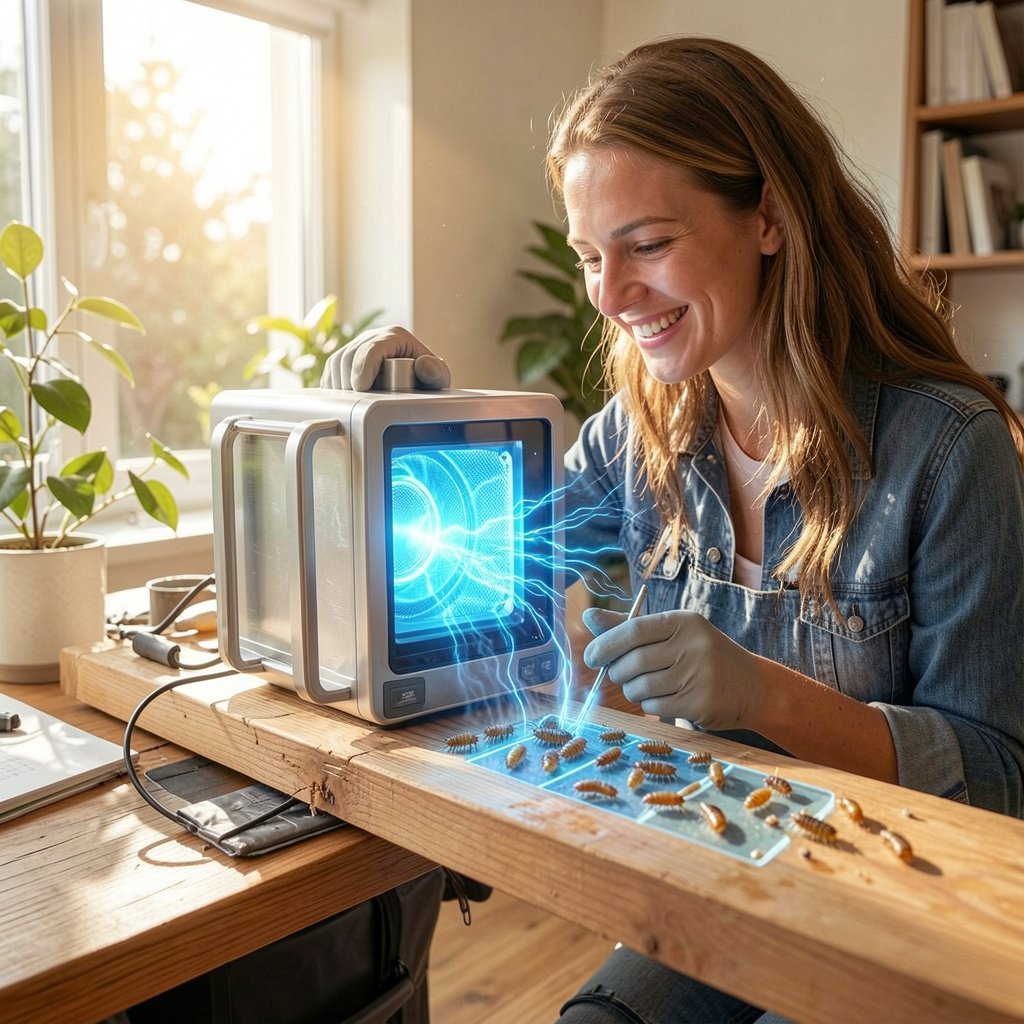
Discovering a woodworm infestation can be an unsettling experience. Tiny exit holes, fine wood dust, and the uncertainty of hidden damage often leave homeowners wondering how serious the problem is and what the best solution might be. Fortunately, advances in microwave technology have given property owners a modern, chemical-free way to deal with active wood-boring insects.
Over the years, Shashel has shared stories from homeowners and professionals who have used its microwave technology to protect valuable timber. While every property and infestation is unique, these experiences highlight a common theme: peace of mind after treatment.
The Moment Homeowners Realize There Is a Problem
For many people, a woodworm infestation begins with small warning signs.
Common indicators include:
- Tiny round exit holes
- Fine powder known as frass
- Weak or damaged timber
- Beetles appearing indoors
- Unusual sounds coming from wooden structures
At first, many homeowners are unsure whether the infestation is active or left over from years ago. That uncertainty often creates just as much concern as the insects themselves.
Trying Traditional Solutions
Like many property owners, customers often begin with familiar approaches.
Some report trying:
- Surface sprays
- Wood preservatives
- DIY insecticides
- Home remedies
- Repeated chemical treatments
While these methods may have their place depending on the situation, customers looking for a chemical-free alternative often start searching for a different solution when they want to avoid applying pesticides throughout their home.
Discovering Microwave Technology
For many users, microwave treatment represents a completely different way of thinking about woodworm control.
Instead of relying on chemical toxicity, Shashel uses carefully controlled non-ionizing microwave energy.
Because wood-boring insects contain much more moisture than dry, seasoned timber, they absorb the microwave energy more efficiently. Their internal temperature rises until they cannot survive.
This process can eliminate:
- Eggs
- Larvae
- Pupae
- Adult beetles present within the treated area
The treatment targets active infestations without applying chemical pesticides to the timber.
A Homeowner’s Experience
One customer featured by Shashel described struggling with a persistent woodworm infestation despite trying several different remedies.
After switching to microwave treatment, the customer explained that they quickly stopped worrying about the infestation and expressed relief that their home had been protected.
Although every situation is different, this experience reflects a feeling shared by many homeowners: confidence that the problem has been addressed.
Confidence for Wooden Homes
Another customer emphasized the reassurance that comes from owning a dedicated microwave treatment device for a timber home.
Rather than waiting for signs of damage to become more serious, the customer viewed the equipment as an important part of protecting wooden structures over the long term.
This highlights another benefit beyond treatment itself—the confidence that valuable timber can be maintained proactively.
Professional Perspectives
Customer stories are not limited to homeowners.
Shashel also features feedback from pest control professionals who have incorporated microwave technology into their work.
One experienced exterminator describes using Shashel microwave devices for many years, noting that they find the equipment effective, easy to use, and reliable for treating woodworm infestations.
While every professional chooses methods based on the specific project, these experiences demonstrate growing interest in microwave technology within the industry.
Life After Treatment
Customers often describe benefits that go beyond simply eliminating wood-boring insects.
Many appreciate:
- Greater confidence in their wooden structures
- A chemical-free treatment option
- Preserving original timber
- Reduced concern about hidden infestations
- Less disruption compared with extensive timber replacement
For homeowners, knowing that active insects have been addressed often provides valuable peace of mind.
Suitable for More Than Homes
Customer experiences come from many different types of projects.
Microwave treatment is suitable for:
- Residential homes
- Holiday properties
- Historic buildings
- Museums
- Churches
- Timber-framed houses
- Antique furniture
- Commercial buildings
Although each project has its own challenges, the objective remains the same: protecting valuable wood while minimizing unnecessary intervention.
Why Customers Choose a Chemical-Free Approach
Many property owners are increasingly interested in environmentally responsible solutions.
Microwave treatment offers several advantages:
- No chemical insecticides
- No toxic fumigants
- No chemical residues
- Targeted treatment of affected timber
- Preservation of original wooden structures
For families, conservation specialists, and restoration professionals, these benefits often influence their choice of treatment.
The Science Behind the Results
Customer satisfaction ultimately depends on effective technology.
Microwave treatment works because it is based on established scientific principles.
As controlled microwave energy passes through timber, moisture-rich insects absorb more energy than the surrounding dry wood. This raises the insects’ internal temperature while allowing treatment to focus on the active infestation.
Unlike surface-applied chemicals, the process targets insects within the wood itself.
Looking Ahead
As awareness of microwave woodworm treatment continues to grow, more homeowners and professionals are exploring alternatives to conventional chemical methods.
Modern property owners increasingly value solutions that combine:
- Effective treatment
- Sustainable practices
- Preservation of original timber
- Scientific innovation
- Long-term property protection
Shashel continues to support these priorities by developing microwave technology for wood preservation and sharing the experiences of customers who have successfully used it.
Conclusion
Every woodworm infestation is different, but the goal is always the same: protect valuable timber before further damage occurs. Real customer experiences shared by Shashel illustrate how microwave technology has helped homeowners and professionals address active infestations while avoiding routine chemical treatments.